How to Get Fit in Your 40s (Without Burning Out or Breaking Down)
Weird things start happening after you turn 40.
What is with that little noise we make when we (finally) sit in a comfy chair… “oof”?
Your joints feel like they need a bath in WD-40.
Your clothes seem to be shrinking (it’s definitely not you… right?).
And sprinting for a bus suddenly feels like an Olympic event.
Your body just feels… different.
And most people assume that’s just age.
But here’s the truth:
👉 It’s not that you’re getting old — it’s that your body isn’t moving the way it used to.
Years of sitting, stress, and training without direction slowly chip away at how your body functions.
You lose coordination.
You lose rotation.
You lose that feeling of being athletic — even if you’re still going to the gym.
So you try to fix it the obvious way:
train harder
stretch more
push through it
And yet… nothing really changes.
That’s because you’re missing a key piece.
In this article, I’ll show you how to get fit in your 40s — not by doing more, but by fixing the missing link that actually makes your body feel strong, mobile and energised again.
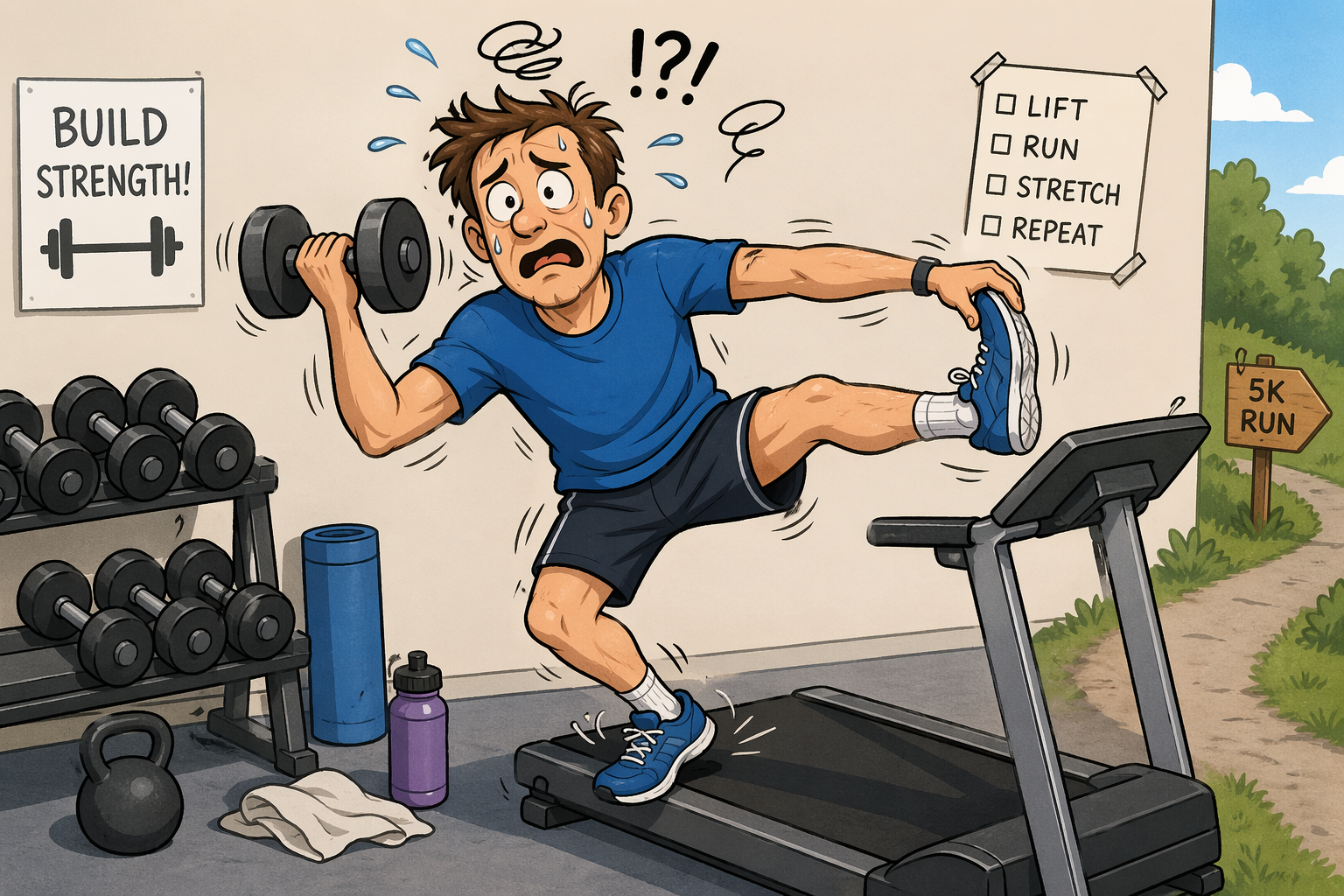
Why Getting Fit In Your 40s Feels So Much Harder
Getting older isn’t just “in your head” — there are real physical changes happening.
Muscles and tendons lose some of their elasticity.
You gradually lose muscle mass (this is called sarcopenia).
Hormone levels like testosterone and oestrogen start to decline.
So yes — your body does change.
But here’s where most people get it wrong:
👉 These changes aren’t the main reason you feel stiff, unfit or out of shape.
The bigger shift is your lifestyle.
Think about your 20s for a second.
You probably had:
more free time
fewer responsibilities
more energy to throw at training
Now?
Your days are packed.
Your job is more demanding.
You’ve got a family, a business, or both pulling on your time and attention.
Life is different — so your body responds differently.
And yet most people still try to train like they did back then.
👉 That’s why what used to work… no longer does.
The Biggest Mistake Most People Make After 40
It’s natural to fall back on the workouts you used to know.
Load up a barbell and lift it.
Deadlift it.
Squat it.
Bench press it.
Go heavy or go home.
Then run like the wind.
But here’s the problem:
👉 You’re trying to train like your old self… in a body that doesn’t move the same way anymore.
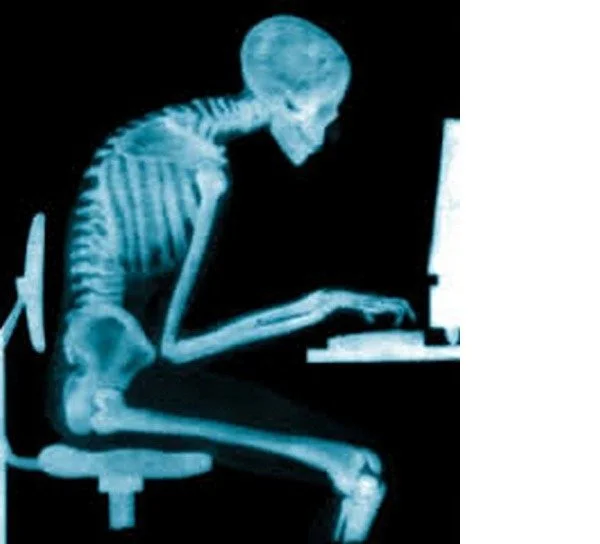
Years of sitting, stress and poor movement habits change how your body functions.
So when you jump straight back into heavy lifting, without addressing that first…
You’re setting yourself up for:
injuries
frustration
and feeling like your body is “failing” you
It’s not.
You’re just skipping a step.
Training shouldn’t be about how many calories you can burn.
👉 It should be about improving how your body functions.
Because when you understand what movement qualities you’ve lost — whether that’s mobility, control, or coordination — you can actually start fixing the root problem.
And this is where most people get it wrong.
Used properly, the weights room is one of the best tools you have:
to move better
to build strength
to feel athletic again
But if your exercises don’t match what your body actually needs…
👉 it can be the fastest way to lock yourself up even more.
And that’s the missing link most people never address.
The Missing Link: Why You Feel Stiff, Weak and Out of Shape
A major challenge your body is constantly dealing with is gravity.
Picture the stereotypical “old person” — bent over, being slowly pulled towards the ground.
That doesn’t happen overnight.
👉 It’s the result of years of your body adapting to the positions and stresses you put it under.
Sitting more.
Moving less.
Training without fixing underlying issues.
Over time, your body starts to reorganise itself.
You lose movement where you need it most — particularly through the hips, shoulders and torso.
Rotation disappears.
Joints stop moving as they should.
And when that happens, your body has to find a way to keep you moving.
So it compensates.
It starts borrowing movement from areas that aren’t designed to handle it…
…like your lower back or your knees.
And that’s when things start to feel off.
Tight hips that never loosen up.
A back that always feels stiff.
Niggles that don’t seem to go away.
👉 Not because you’re weak.
👉 Not because you’re getting old.
But because your body isn’t moving well anymore.
That’s the missing link.
Until you restore how your body moves — not just how hard it works — you’ll keep feeling stiff, weak and out of shape…
…no matter how much you train
What Actually Works to Get Fit in Your 40s
1.Restore How Your Body Moves
Reset exercises can create an immediate increase in the range of movement available to your limbs.
When you run or lower into a squat your hip needs to be able to internally rotate.
To bench press or do a press up your shoulder needs to be able to internally rotate.
These movements allow you to get stronger. Without them, you’re heading towards injury.
You don’t need to overcomplicate this — just start by checking a couple of key movements:”
To improve these markers you can start by assessing yourself for how much you currently have.
The Straight Leg Raise - lift your leg past 45º you need to be able to internally rotate your hip.
Straight Leg Raise
Shoulder internal rotation - the first target is to get to 45º minimum, then develop to 90º.
Shoulder internal rotation assessment
Try these reset exercises then recheck your measurements. If you see a notable increase then these are good starting points for you before you lift.
To improve hip IR use the Hip Lift with FAIR.
90/90 Hip Lift FA IR
To improve shoulder IR try Tall Seated Reach.
Tall Seated Reach Drill
Details matter with these exercises. Ensure you breath slowly, in through the nose and take a long exhale through the mouth.
This breathing serves as a signal to your nervous system to stay calm and accept the new movements.
2. Build Strength (Without Destroying Yourself)
If you’re a busy bunny and you have limited time available to train then full body workouts are your friend.
A squat or deadlift variation.
An upper body push.
An upper body pull.
Core.
Tickle on the arms.
And all your bases are covered.
Technique is king, queen and end of level boss. You should aim to perform every rep like there was a cash prize for nailing the technique.
No ego, no trying to impress Janet in accounts or random bloke on another bench.
No one cares how much you lift, so don’t cause yourself an injury by going heavy to the detriment of technique.
A simple cue is to keep 2 reps in the tank.
When you end a set it should feel like you could probably do two more reps, with good technique…but only just.
3.Dumbells over barbells
Having more years on the clock means there is more chance for imbalances in strength and coordination between each side of your body.
Dumbbells allow greater freedom of movement at each joint, rather than being locked to the other side of your body and forced into a movement.
Especially if you’re new to training or returning after a long break I’d prioritise dumbbells over barbells.
For example, dumbbell chest press vs barbell bench press. One arm row vs barbell bent over row.
4. Move More (But Smarter)
You’re probably bored silly of being told to get 10,000 steps.
But consider this.
Yes, walking is a great way to burn a few more calories.
But more than that. It’s a vital way to lock in your returning mobility as it develops.
If you’re tied to a desk and barely moving then you’ll be have a much harder time of getting your mobility gains to stick.
To be able to move well, you have to move.
5. Train Consistently — Not Perfectly
You know life isn’t going to go smoothly, there’s going to be bumps along the way.
Losing sleep when you’re kids sick, a sudden new deadline for a work project…life happens.
Instead of throwing your toys out of the pram and doing nothing because you can’t follow your program to the letter…focus on what you can do…no matter how minimal.
I’ve had times when my training session was less than 10 minutes due to life throwing curveballs.
It wasn’t ideal, but it stopped me from feeling like I had to start all over again. I was still getting some stimulus to my fitness, no matter how small.
6. Recovery Is Now Part of Training
Exercise is just a stimulus, for your body to adapt it needs to recover.
It needs decent food, water and sleep.
Sleep is a key time when we build muscle and improve our glucose sensitivity…a key part of staying healthy and disease free for our later years.
If you’re a new parent, then I feel for you, this isn’t your time to get optimal sleep.
But if you’re doomscrolling and missing sleep then you’re doing yourself a big disservice.
Mistakes to Avoid When Getting Fit After 40
Getting exceptional results (as in any part of life) is often about doing mundane things well.
This means doing reset/mobility drills to improve your movement.
Performing exercises at an intensity that matches your current abilities.
If you aim to run 5km as fast as you can every time you run.
Or hit a new one rep max everytime you deadlift, then that’s not a plan.
That’s not a roadmap that takes you from where you currently are and progresses you to your goal.
Don’t ignore pain either - it’s not something to “work through”.
It’s not a badge of honour to run with tape all over your knees.
Pain is literally your body shouting “this is not a good idea”.
Take the hint and listen.
It’s better to slow down and readjust rather than lose months of training from needlessly blowing some tissues out.
A Simple Plan to Get Started This Week
Try the reset drills mentioned earlier - this is a maximum of 5 minutes out of your day.
Take a look on your phone at how many step you’re hitting per day.
If it’s less than 10,000 see if you can average an extra 1000 steps per day, this works out at an extra 4-5 minutes walking in the morning and same again in the evening.
2-3 good quality strength training sessions.
Don’t worry about smashing yourself. Get close to fatigue on each set but don’t actually reach it.
Final Thought: You’re Not Past It — You’re Just Missing This
Fingers crossed you’re not even at the halfway point of your life.
There is no need to spend the next 40-60 years hating how you feel, being exhausted and avoiding looking in the bathroom mirror.
Your body has just forgotten how to do a few movements but it can be gently reminded.
Maybe an Olympic gold medal isn’t in your immediate future but you’ll be amazed at what your capable of when you’re given the opportunity.
And equally delighted at how soon you’ll start to feel the difference.
If this resonates, this is exactly what I breakdown every week in Your Missing Link - — simple ways to move better, feel better and get stronger without burning out.
It’s full of ways to stay strong, mobile and give middle age the middle finger.
Click this link to sign up and join over 500 like minded people.